A Journey of Faith
Discovering Jesus and Following Him Through Life
Life Is a Journey
Life is a journey. From the day we are born, each of us begins a story shaped by family, relationships, experiences, joys, disappointments and decisions.
Along the way, we may begin asking deeper questions: Why am I here? Is there a God? Does God care about me? What gives life meaning? And what happens after death?
No two life journeys are alike. Some people begin exploring the Christian faith as children; others start much later. Some have many questions before they are ready to believe. You are welcome to explore those questions here.
At Sungai Ara Christian Centre (SACC), we believe the Christian faith is about knowing and following Jesus Christ. It is not simply joining a religion, attending church or making a one-time declaration. It is a relationship with God that begins through faith in Jesus and continues throughout life.
The Whole Journey at a Glance — A to J
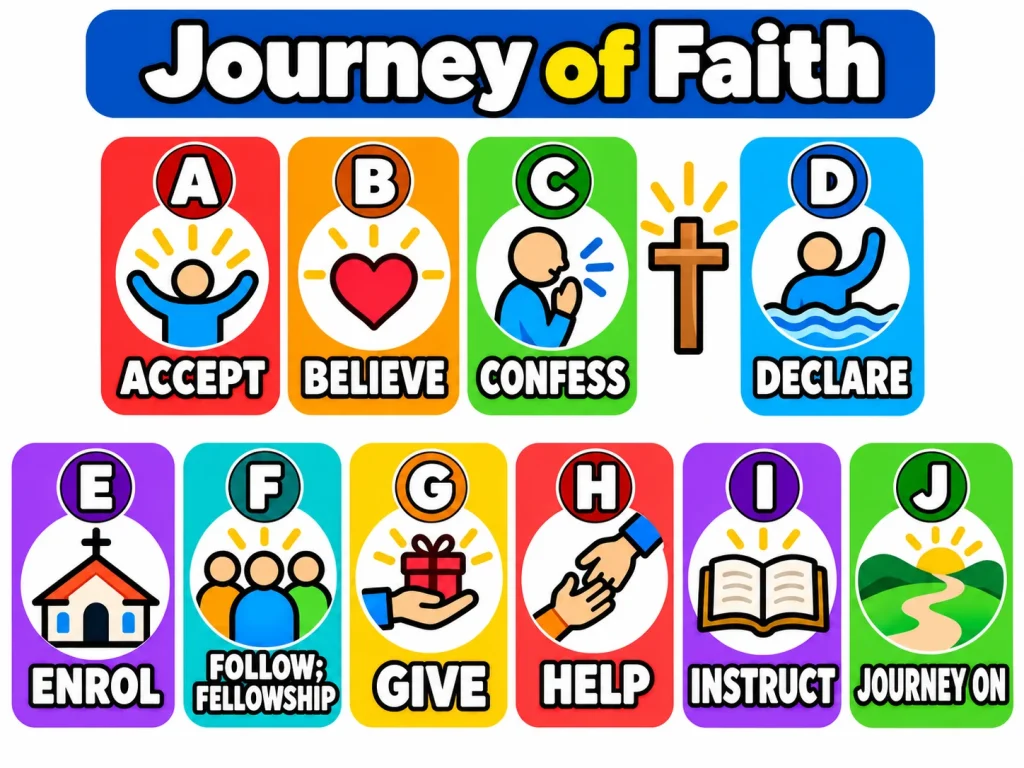
We use the letters A–J as a simple guide to explain the Christian journey. It helps us talk about coming to know Jesus, publicly identifying with Him and growing as His followers.
A — Accept: Acknowledge our sin and need for God’s forgiveness.
B — Believe: Trust who Jesus is and what He has done for us.
C — Confess: Turn to God and acknowledge Jesus as Lord.
D — Declare: Express our faith publicly through baptism.
E — Enrol: Connect and belong in a local church community.
F — Follow & Fellowship: Learn from Jesus and share life with believers.
G — Give: Practise willing generosity with what God has entrusted to us.
H — Help: Love and serve others.
I — Instruct: Encourage and help others grow in their faith.
J — Journey On: Keep following Jesus through every season of life.
A–J is a teaching framework, not a rigid timetable or ten tasks that earn salvation. Coming to faith involves closely related responses to the gospel. Baptism is an important milestone. The elements E–J belong together throughout Christian life, not one after another as stages to finish.
What Is the Good News of Jesus?
God made us and loves us
The Bible teaches that God created the world and made every human being in His image. Our lives have dignity and value because we matter to Him. God invites us to know Him and to live in a relationship with Him.
Explore the Bible (NIV): Genesis 1:26–27; John 3:16–17.
We have all sinned and need forgiveness
Yet the Bible says that all of us fall short of God’s ways. It calls this sin. Sin is not just particular wrong actions; it includes turning away from God, living as though we do not need Him, and failing to love Him and others as we should.
Sin damages our relationship with God. We cannot repair it by simply trying to do enough good things or becoming religious.
Explore the Bible (NIV): Romans 3:23; Ephesians 2:8–9.
Jesus died and rose again for us
Christians believe that Jesus Christ is the Son of God, truly God and truly human. He lived without sin, showed us God’s love and truth, died on the cross for our sins, and rose bodily from the dead.
Jesus’ death and resurrection are at the centre of the Christian message. Through Him, God offers forgiveness, reconciliation and new life. Our hope rests in the living Jesus, not only in His moral teaching.
Explore the Bible (NIV): John 1:14; Romans 5:8; 1 Corinthians 15:3–4.
Salvation is God's gift
The good news is that salvation is a gift of God’s grace. We cannot earn it through good deeds, church attendance, baptism or saying the right words. God calls us to turn to Him and put our faith in Jesus Christ. As we follow Him, a changed life begins to bear fruit in love and good works.
Explore the Bible (NIV): John 1:12; Ephesians 2:8–10.
Beginning a Relationship with Jesus — A, B and C
What does it mean to respond to the good news of Jesus? At SACC, we use A, B and C to help explain this personal response. These descriptions are closely connected, not three separate requirements to complete in order.
A — Accept: Recognising our need for God's forgiveness

We begin by honestly acknowledging that we have sinned and fallen short of God’s ways. We need God’s forgiveness and cannot make ourselves right with Him through our own efforts. Recognising our need is not about being worse than others; it is about coming to God honestly.
Explore the Bible (NIV): Romans 3:23.

C — Confess: Turning to God and acknowledging Jesus as Lord

We can express our response through repentance—turning away from sin and toward God—and by acknowledging Jesus as Lord. We can honestly confess our sins, ask God for mercy and entrust ourselves to Jesus. Faith and repentance belong together; there is no required script or formula that saves us.
Explore the Bible (NIV): Acts 3:19; Romans 10:9–10.
You may be ready to trust Jesus, or you may still have questions. You do not need to pretend to understand everything before asking someone to talk with you.
A Sample Prayer
If you want to express your repentance and faith in Jesus, you may find it helpful to speak to God in your own words. Here is an example of the kind of prayer someone might make:
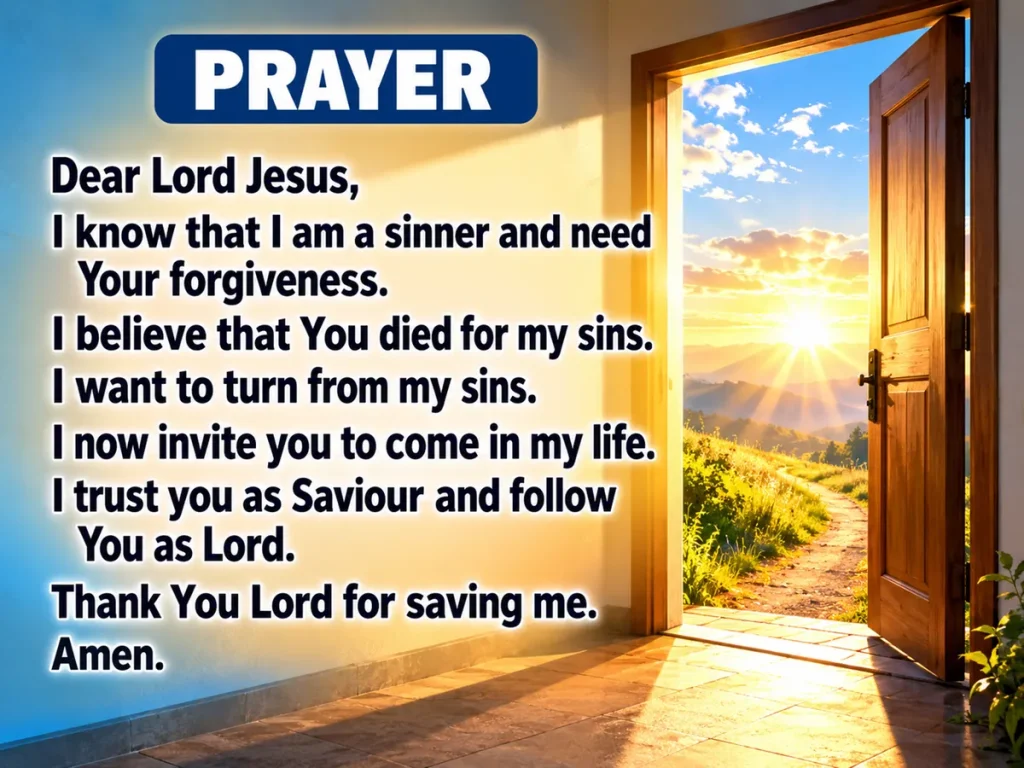
This prayer is only an example. Simply repeating these words does not automatically make anyone a Christian. Salvation is God’s gift, received by grace through faith in Jesus Christ. What matters is sincerely turning to God and trusting Jesus, not repeating a particular set of words.
If you have prayed, want to talk about placing your faith in Jesus, or are still exploring, we would be glad to listen and help you understand the next steps.
Explore the Bible (NIV): Ephesians 2:8–9; Romans 10:9–10.
Declaring Our Faith — D: Baptism

When someone has placed their faith in Jesus, baptism is an important way to identify publicly with Him. Jesus commanded His followers to make disciples and baptise them. Baptism points to sharing in Jesus’ death and resurrection, and to living a new life with Him.
At SACC we practise believers’ water baptism. Baptism is an act of obedience and a public expression of faith; it is not how someone earns salvation. People may begin attending church, praying and learning about Jesus before they are baptised.
Explore the Bible (NIV): Matthew 28:19–20; Romans 6:3–4.
Growing in Faith — E to J: Living as Jesus' Followers
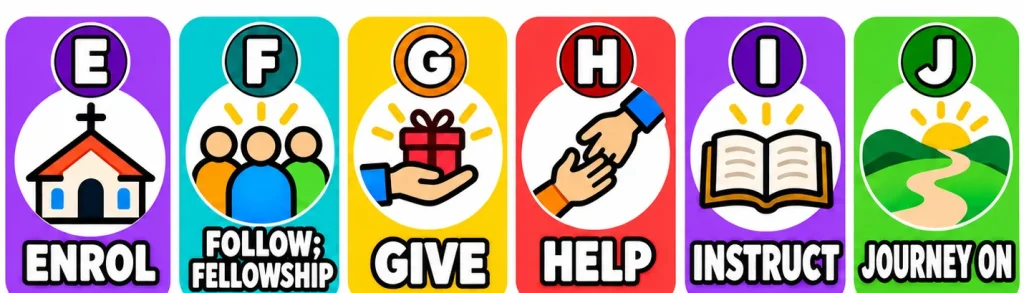
Following Jesus is lifelong. Christians seek to grow in their relationship with God through the help of the Holy Spirit and through life together as a church.
We describe six interconnected parts of this life:
E — Enrol, belonging to a local church;
F — Follow & Fellowship, learning and sharing life;
G — Give, living generously;
H — Help, serving others;
I — Instruct, encouraging others to grow; and
J — Journey On, continuing faithfully through life’s changes and challenges.
These are not six consecutive levels. We learn, worship, give, serve, encourage and persevere together. Different parts may begin at different times, overlap and continue throughout life. We also keep learning and sometimes struggle along the way. The centre of the journey is Jesus Himself.
Explore the Bible (NIV): Acts 2:42–47; Ephesians 4:15–16.
A Hope Beyond This Life
The Christian life does not promise that every problem will disappear. We still experience suffering, loss and uncertainty. But Christians trust that Jesus is alive and that His love and faithfulness give us hope through every season.
The Bible teaches that Jesus will return and that those who belong to Him have the hope of eternal life with God. Our earthly journey therefore has a lasting hope beyond death.
Explore the Bible (NIV): John 11:25–26; Revelation 21:1–5.
Where Are You on Your Journey?
Perhaps you are curious about the Christian faith. Perhaps you want to learn more about Jesus, have questions about the Bible, or have been thinking about faith for a long time.
Wherever you are, you are welcome to explore, ask questions and speak with someone at SACC. You do not need to have all the answers before reaching out.